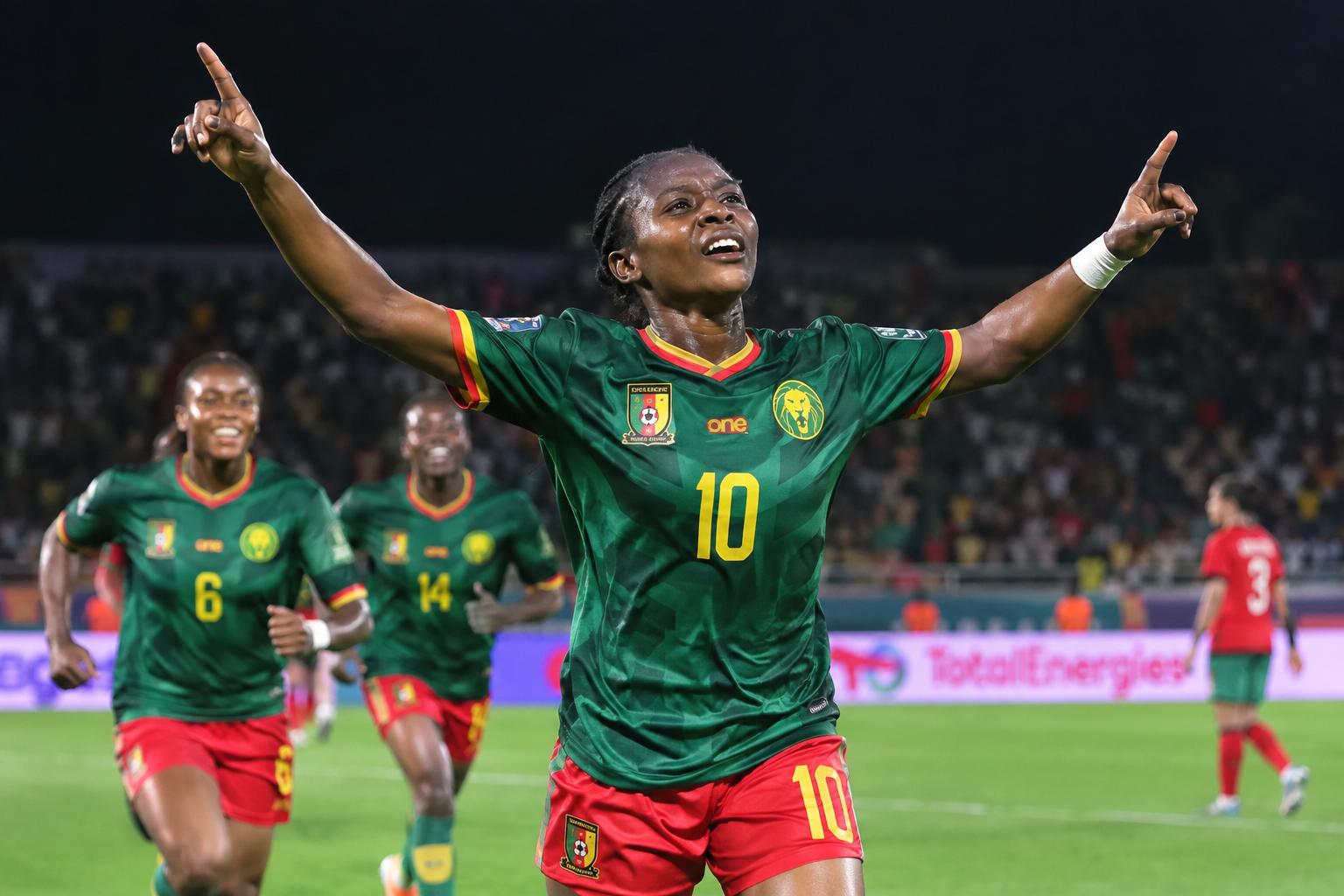
Cameroon had lost all three of their previous Women’s Africa Cup of Nations finals. Three times they had gone all the way to the last match and come away with nothing. So when they finally lifted the trophy in Rabat on 16 August 2026, it closed out one of the more dramatic runs the tournament has seen, one that went through the defending champions, the host nation, and a debutant side nobody saw coming.
Key Takeaways
- Cameroon won their first-ever WAFCON title, beating Malawi 3-0 in the final after previously losing all three of their prior final appearances.
- Host nation Morocco were eliminated in the semi-final by Cameroon on penalties, 3-1, after 120 goalless minutes.
- Cameroon’s route to the final also went through defending champions Nigeria, beaten 1-0 in the quarter-final.
- Debutants Malawi reached the final on the strength of sisters Tabitha and Temwa Chawinga, beating Algeria 3-1 in their own semi-final.
- Both finalists had already secured 2027 FIFA Women’s World Cup qualification before a ball was kicked in the final, since WAFCON 2026 doubled as the continental qualifying route.
A Tournament Expanded, Then Turned Upside Down
Morocco hosted WAFCON for the third consecutive time, staging matches in Casablanca and Rabat after Fez was dropped from the fixture list. The field itself had grown unusually large: originally planned as a 12-team tournament, CAF expanded it to 16 after qualifying concluded, adding four of the highest-ranked eliminated nations by FIFA ranking to fill out four groups of four.
That expansion mattered, because WAFCON 2026 was not just a continental title chase. It doubled as Africa’s qualifying route to the 2027 FIFA Women’s World Cup in Brazil, with the top four finishers securing direct qualification and two more advancing to an inter-confederation playoff. Every knockout match from the quarter-finals onward carried that extra weight.
Nigeria arrived as defending champions, having beaten Morocco 3-2 in the 2024 final. Their reign as African champions lasted exactly one tournament.
Cameroon’s Road Through the Favourites
1. Knocking Out the Defending Champions
Cameroon’s run to the final started with a statement. They beat Nigeria, ten-time WAFCON winners and the reigning champions, 1-0 in the quarter-final, ending the Super Falcons’ title defence before the semi-finals even kicked off. It was the kind of result that immediately reframed who the tournament’s favourites actually were.
2. A Penalty Shootout for the Ages
The semi-final against host nation Morocco, played at the Moulay El Hassan Stadium in Rabat on 13 August, produced 120 minutes of football without a single goal. Morocco even had the chance to avoid a shootout altogether when Fatima Tagnaout was handed a penalty in extra time, but she could not convert it.
The shootout that followed swung heavily in Cameroon’s favour. Marie Ngah, Rose Bella and Myriam Maéva Nyadjou all converted for Cameroon, while Morocco missed three of their four attempts, through Kenza Chapelle, Meryem Atiq and Sakina Ouzraoui, with only Hanane Aït El Haj finding the net. Final shootout score: Cameroon 3-1 Morocco. For a Cameroon side that had lost all three of its previous WAFCON shootouts, the result carried a particular weight, ending the host nation’s tournament in front of its own fans.
The Final: Cameroon 3-0 Malawi
Malawi’s presence in the final was itself one of the tournament’s biggest stories. Ranked 153rd globally and 32nd in Africa, the tournament debutants rode an attacking partnership between sisters Tabitha and Temwa Chawinga all the way to a 3-1 semi-final win over Algeria, setting up a final that neither team had ever reached before.
Played at the Olympic Stadium in Rabat on 16 August, the final did not stay close for long. Marie Ngah opened the scoring in the 20th minute, Naomi Eto doubled the lead ten minutes later, and Cameroon went into half-time already 3-0 up after Ngah added a third goal in first-half stoppage time. Malawi, for all the attacking talent that had carried them to the final, could not find a way back into the match, and Cameroon closed it out comfortably to secure their first WAFCON title.
Morocco and Algeria met separately in the bronze medal match, with Algeria winning on penalties to claim third place and, along with Cameroon and Malawi, book their own spot in the 2027 World Cup qualification picture.
What the Win Means
Cameroon become only the fourth different nation to win WAFCON since the competition’s 1998 inception, joining a list still headed by Nigeria’s ten titles, with Equatorial Guinea on two and South Africa on one. Breaking a run of three final defeats to finally get over the line, and doing it by eliminating both the defending champions and the host nation along the way, makes this one of the more complete title runs in the tournament’s history rather than a fortunate one.
For Malawi, reaching a first WAFCON final as debutants, built almost entirely around one attacking sibling partnership, is the kind of story that tends to shift how a footballing nation is perceived continentally, regardless of the final scoreline. And for Morocco, an early exit on home soil closes a hosting cycle that had otherwise been about building the women’s game domestically.
With WAFCON 2026 now filed away, attention across African football shifts toward a stacked 2027, headlined by AFCON 2027 in Kenya, Tanzania and Uganda. Our full calendar of every major African football tournament in 2027 rounds up everything on the continent’s football calendar between now and then, men’s and women’s, senior and youth, in one place.