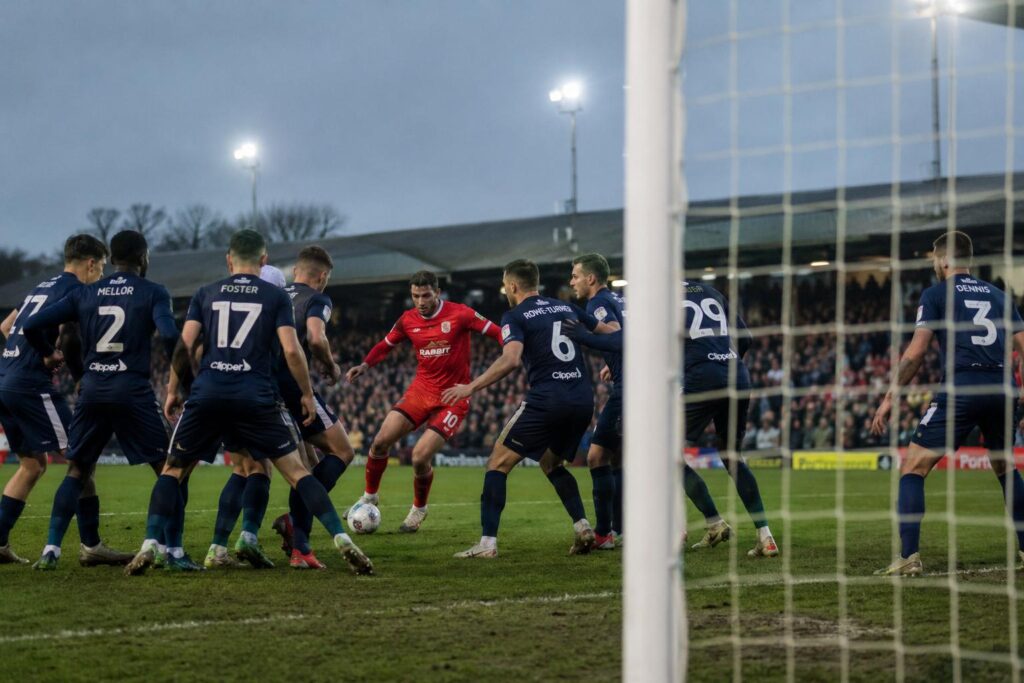
You are ten minutes into a cup tie and the underdog has not had a single shot. Nine or ten players are camped inside their own penalty box, the ball keeps getting hoofed clear, and the home crowd is getting restless. A commentator sighs and says the visitors have “parked the bus.” If you are new to football, that phrase probably sounds stranger than anything else in the sport’s vocabulary, so let’s break down exactly what it means and why it works.
Key Takeaways
- “Park the bus” describes an ultra-defensive setup where a team packs almost every player behind the ball to shut down space and limit scoring chances.
- The phrase was popularized by Jose Mourinho in 2004 after his Chelsea side were held goalless by a defensive Tottenham Hotspur.
- Teams typically park the bus to protect a lead, cope with a stronger opponent, or manage a spell down to ten men.
- The tactic relies on a low, narrow defensive block and quick players ready to break forward on the counter.
- It is one of football’s most divisive tactics, praised for its effectiveness and criticized for making matches hard to watch.
What Does Park the Bus Mean in Football?
Parking the bus means setting up almost entirely to defend, with the majority of outfield players dropping deep to form a wall in front of their own goal. The idea is simple: if there is no space between your defense and your goalkeeper, the opposition has nowhere to play the ball through.
It goes further than a normal defensive setup. A team parking the bus commits to soaking up pressure for long stretches, sometimes the entire match, while offering almost nothing going forward.
Where Did the Phrase Park the Bus Come From?
The term traces back to Jose Mourinho, who used it in 2004 after his Chelsea side were held to a goalless draw by Tottenham Hotspur at Stamford Bridge. Frustrated by how deep Spurs had sat, Mourinho told reporters, “As we say in Portugal, they brought the bus and they left the bus in front of the goal.”
The image stuck, and English football adopted it almost immediately. The phrase itself did not start with Mourinho, though. Spanish and Portuguese writers had used a similar line years earlier, reportedly to describe Racing Santander’s setup against Real Madrid and Barcelona back in 1984.
By 2022, “park the bus” had become common enough in English that it was officially added to the Oxford English Dictionary, alongside Alex Ferguson’s “squeaky bum time.” Few football phrases have made that jump from dressing room quote to dictionary entry.
Why Do Teams Park the Bus?
Managers do not choose this approach for fun. It usually comes down to one of a handful of specific situations where defending first is the smarter bet.
1. Protecting a Lead
Once a team is ahead, especially late in a match, the priority shifts from creating chances to killing the game off. Dropping deeper, keeping bodies behind the ball, and forcing the opposition to work for every yard is often the safest way to see out a result.
2. Facing a Stronger Opponent
Smaller clubs and underdogs frequently park the bus against teams with more skill or a bigger budget. Trying to trade attacks with a stronger side usually ends badly, so the more realistic plan is to stay compact, frustrate them, and hope for a set piece or a break on the counter.
3. Playing with Ten Men
A red card changes the math instantly. With one fewer player on the pitch, most teams retreat into a deeper, narrower shape simply to cover the space they can no longer occupy higher up the field.
What Does a Parked Bus Look Like on the Pitch?
On the pitch, it usually means two banks of four or five players sitting close to the penalty area, with barely any gap between the lines. Wingers track back to double up as extra defenders, and the team’s one or two forwards are often left isolated, waiting for a rare chance to break.
Passing out from the back gets replaced by long clearances, and possession is treated as something to get rid of rather than build with. It is not pretty, but it is deliberate. Every player has a job, and that job is almost always to stay compact and deny space.
Is Parking the Bus a Smart Tactic or a Cop-Out?
Whether you rate parking the bus as clever or cowardly usually depends on which side of the result you are on. Fans of the team doing the defending tend to call it disciplined and resourceful. Fans of the team trying to break it down often call it negative or boring.
From a purely tactical standpoint, there is a strong case for it. Against a technically superior opponent, inviting pressure into a packed defense and hitting them on the counter has won plenty of famous results, including several of the biggest cup upsets in the sport’s history.
The criticism is just as fair, though. When both teams set up defensively, matches can turn into ninety minutes with almost no goalmouth action, and fans notice.
Reading the Game Next Time You See It
Once you know what parking the bus looks like, you will start spotting it everywhere, from a Sunday league side protecting a 1-0 lead to a Champions League underdog trying to survive against a giant. It is not always the most exciting football to watch, but it is a legitimate response to a difficult situation, and sometimes the only one that makes sense.
So the next time a manager sends a team out to sit deep and soak up pressure, you will know exactly what is happening and why. It is a plan built entirely around not losing, in the hope that not losing eventually turns into winning.
2 thoughts on “What Does “Park the Bus” Mean in Football?”
Comments are closed.