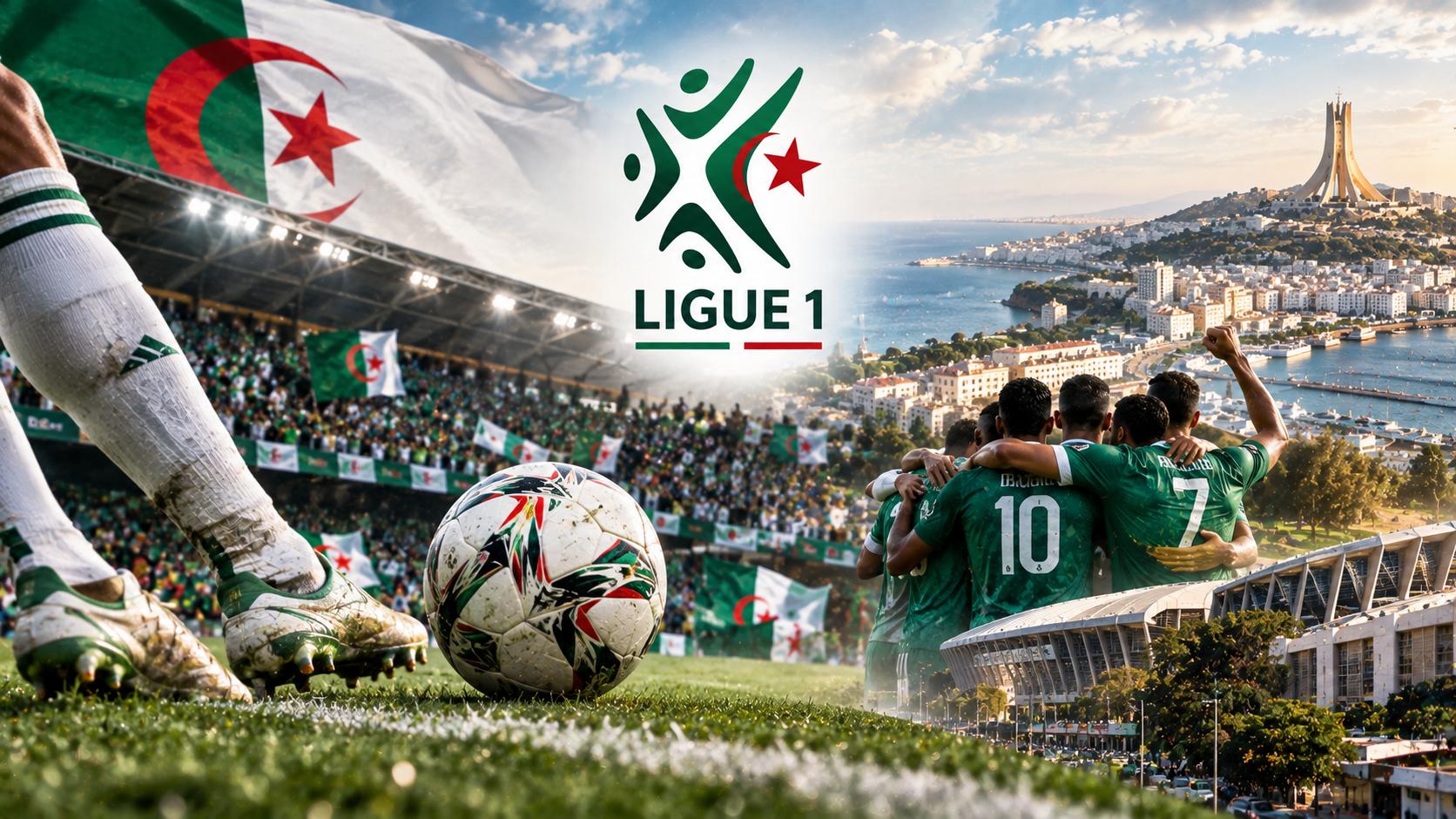
Algerian Ligue 1, officially the Ligue Professionnelle 1, is the top division of Algerian football, contested by 16 clubs across a double round-robin season. The league traces its roots back to Algeria’s independence in 1962, and its champion now earns a direct route into the CAF Champions League, the same continental competition Algerian clubs have chased for decades.
Where The League Came From
Before Algeria’s independence from France in 1962, organised football in the country existed only as regional competitions based around Algiers, Constantine and Oran, with a North African Championship briefly filling the gap as an informal national title between 1957 and 1962. A national league proper began the same year Algeria became independent, giving the country’s football structure and its political history a shared starting point.
That timing puts Algerian club football on a very similar footing to the national team itself, which joined FIFA in 1964, just two years after this same league got underway.
Read More: Who Are the Desert Foxes? Algeria’s National Football Team Explained covers how the national side developed alongside this domestic structure.
How The League Format Works
Sixteen clubs play a double round-robin season, meeting each other home and away, currently sponsored by telecoms company Mobilis and broadcast domestically through EPTV. Three points for a win and one for a draw decide the standings, with goal difference used as the standard tiebreaker.
Promotion And Relegation
The three lowest placed clubs at the end of each season are relegated to Ligue 2, Algeria’s second tier. They are replaced the following season by the top two Ligue 2 finishers plus the winner of a promotion playoff, giving three fresh clubs a route into the top flight every year.
That three-team turnover is a heavier churn than most European leagues use, which keeps genuine jeopardy at the bottom of the table even in seasons where the title race itself is settled early.
How Clubs Reach African Competition
The top two finishers in Ligue 1 qualify directly for the CAF Champions League, Africa’s premier club competition. The third-place finisher and the winner of the Algerian Cup, the country’s main domestic knockout competition, earn spots in the CAF Confederation Cup instead.
Read More: CAF Champions League Explained: Africa’s Biggest Club Competition breaks down what happens once Algerian clubs qualify for that tournament.
The Clubs That Have Actually Won It
A handful of clubs have dominated Algerian football since 1962, and the gap in titles between the leading names and the rest of the league is significant.
JS Kabylie
JS Kabylie hold the record with 14 league titles, the most of any Algerian club, and carry particular cultural weight as a side closely associated with the Kabylie region and its Berber identity. Their trophy count alone makes them the most successful club in the country’s football history.
MC Alger And CR Belouizdad
MC Alger and CR Belouizdad sit level on 10 titles each, with MC Alger the most recent champion after winning the 2025-26 season. Both clubs are based in the capital and have spent decades as genuine title contenders whenever JS Kabylie’s dominance has slipped even slightly.
ES Setif And USM Alger
ES Setif and USM Alger have each won 8 league titles, giving Algeria four clubs with a genuinely serious historical claim to being the country’s biggest name, a spread of success that is rarer in domestic leagues than fans of more top-heavy competitions might expect. USM Alger were also at the center of one of football’s stranger political rows, when a 2024 Confederation Cup semi-final against RS Berkane was cancelled twice.
The Domestic Cup Alongside The League
The Algerian Cup runs parallel to the league season and remains the country’s oldest and most prestigious knockout competition, open to clubs from Ligue 1, Ligue 2 and lower divisions alike. Its winner earns a route into the CAF Confederation Cup alongside the league’s third-place finisher, giving the competition genuine European relevance rather than just domestic prestige.
An Algerian Super Cup fixture, played between the league champion and cup winner where the two are different clubs, opens each new season and gives fans an early look at whichever side is expected to challenge hardest for the title that year. Neither competition carries quite the weight of the league championship itself, but both add extra jeopardy to a season that already has three relegation spots and two Champions League places to fight over.
Why Algerian Ligue 1 Matters Beyond Algeria
Algerian clubs have historically been among the more competitive sides in CAF’s club competitions, regularly reaching the later stages of the Champions League and Confederation Cup even when they fall short of lifting the trophy. The league has also served as a launching pad for players who went on to represent the Desert Foxes at multiple World Cups and AFCON tournaments, even if many of Algeria’s most famous modern exports built their biggest reputations in France, Portugal or England instead.
Read More: The Greatest Algerian Footballers of All Time traces several of those careers back to their earliest years, including players who came through this exact league before moving abroad.
Algerian Ligue 1 is not currently one of the competitions tracked on TuSportNews’s Leagues hub or the AI Predictions hub, both of which focus on Europe’s major leagues and continental cup competitions for now, but its champions regularly cross paths with those same competitions through CAF’s club tournaments each season.
Following Algerian Football From Here
Understanding Algerian Ligue 1 means understanding a league built at the same moment as the country itself, dominated across six decades by four clubs with genuine historical weight behind their trophy counts. JS Kabylie’s record 14 titles anchor one end of that history, while MC Alger’s most recent championship shows the competition for the title remains as open as ever heading into each new season.
Anyone exploring Algerian football beyond its national team should treat this league as the foundation everything else sits on, from the players who represent the Desert Foxes abroad to the club rivalries that fill stadiums across Algiers, Setif and Kabylie every single weekend.