Lucas Radebe was shot in Soweto before he ever set foot in England, the bullet passing through his back and out through his thigh in an attack rumoured to have been an attempt to stop his move abroad. It did not stop him. Radebe went on to captain Leeds United through a Champions League semi-final and lead South Africa to its only Africa Cup of Nations title, becoming one of the most beloved foreign players English football has ever produced.
From Soweto To Kaizer Chiefs
Lucas Valeriu Ntuba Radebe was born on 12 April 1969 in Soweto and started out playing in the Bophuthatswana Soccer League before joining Kaizer Chiefs’ setup in 1989. He was not a natural centre-back at first. Radebe started as a goalkeeper, moved into central midfield, and only later settled into the defensive role that made his name, eventually captaining Chiefs during his five seasons at the club.
Across those five years he made 155 appearances and scored five goals, numbers that undersell how much his versatility across multiple positions shaped his eventual value as a defender who read the game like a midfielder. Having played every line of the pitch bar centre forward by the time he settled at the back, Radebe brought a passing range and positional awareness to central defence that few South African defenders of his generation could match.
Read More: Who Are Bafana Bafana? South Africa’s National Football Team Explained has more background on the national side Radebe would go on to captain.
The Shooting That Almost Ended Everything
Before his move to Leeds, Radebe was shot while out in Soweto with family, taking a bullet that entered his back and exited through his thigh. He has spoken since about seeing blood across the car seat and genuinely fearing for his life in the moment. The attacker was never identified, though speculation at the time linked the shooting to an attempt to prevent his transfer to Europe from going ahead.
He recovered fully, and the incident became one part of a personal story that made his later success in England mean even more to those who knew the full picture.
Becoming “The Chief” At Leeds United
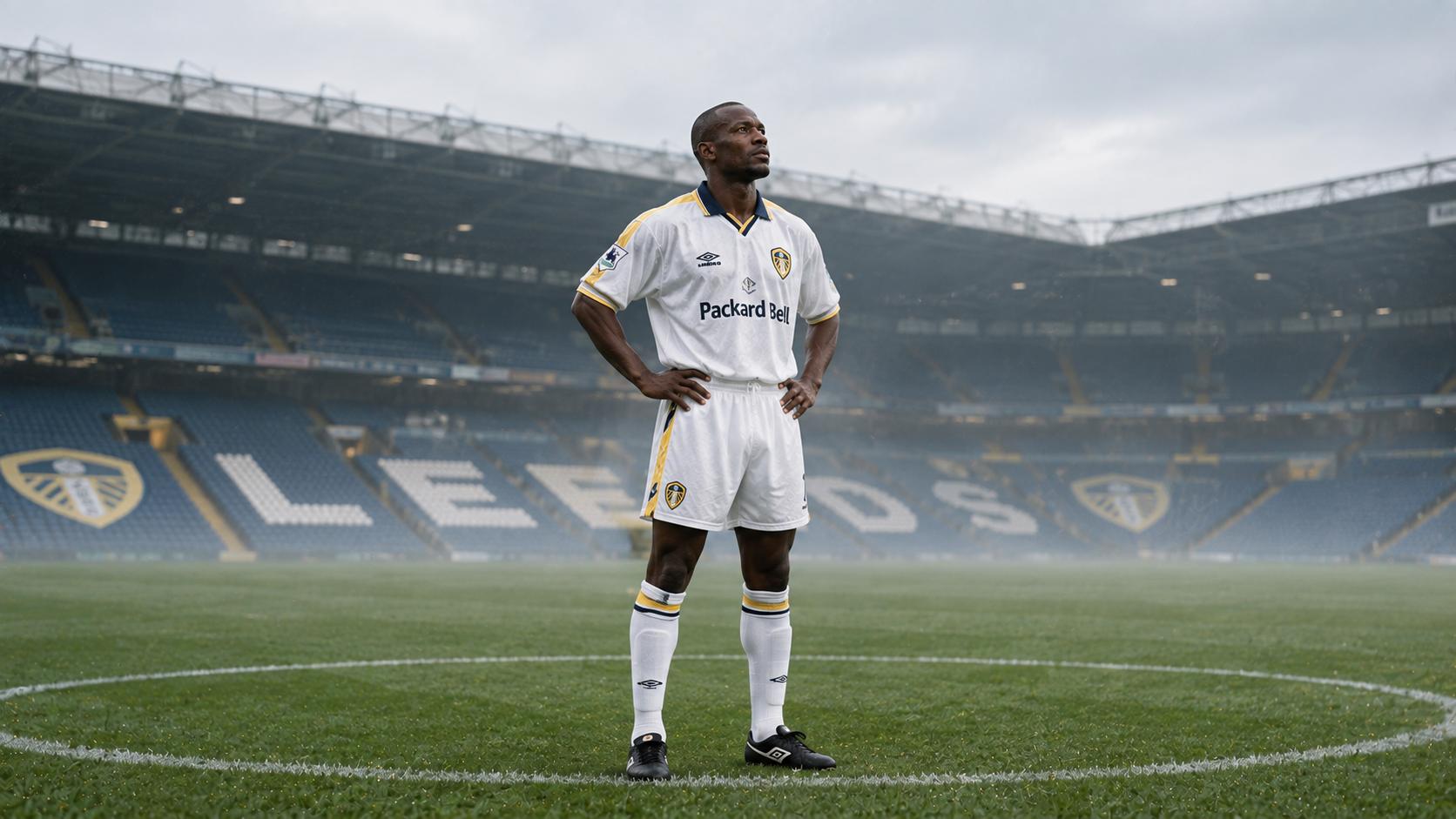
Leeds United signed Radebe in 1994 for £250,000, alongside fellow South African international Phil Masinga in the same transfer window. His start in England was not smooth. Under manager Howard Wilkinson, Radebe struggled to settle, and it was only after George Graham took charge that his career at Elland Road truly began to take shape.
By the 1998-99 season, Radebe was club captain, and Leeds fans had already given him a nickname that stuck for the rest of his career: “The Chief.” He went on to make 256 competitive appearances across eleven seasons, a genuinely long career for a player who arrived as a relative unknown from South African football.
The Champions League Semi-Final Run
Radebe’s Leeds side finished third in the Premier League during the 1999-2000 season, a result that earned them a place in the following season’s Champions League. Leeds went on to reach the 2000-01 semi-finals before losing to Valencia, drawing 0-0 at Elland Road before falling 3-0 in the away leg, a run still regarded as one of the club’s greatest modern European achievements.
Serious knee and ankle injuries picked up around that period limited Radebe’s final seasons at the club, but by then his standing among Leeds supporters was already secure.
His testimonial match at Elland Road on 2 May 2005 drew 37,886 supporters, a number that says everything about how the fanbase felt about a defender who had never actually been born anywhere near Yorkshire.
Read More: The Greatest South African Footballers of All Time places Radebe’s Leeds career in the context of the country’s other great exports.
Captaining Bafana Bafana Through Their Biggest Moment
Radebe made his South Africa debut on 7 July 1992, in the same period the country was rebuilding its football identity after apartheid-era isolation, and went on to earn 70 caps and score two goals for the national team. He captained Bafana Bafana at the 1996 Africa Cup of Nations, lifting the trophy on home soil after South Africa beat Tunisia 2-0 in the final.
Read More: South Africa at AFCON: The 1996 Title That Announced Bafana Bafana covers that tournament in full, including the specific goals and opponents South Africa had to get past.
He went on to captain the side at both the 1998 and 2002 World Cups, giving him one of the most complete captaincy résumés of any African player from that generation: a continental title, two World Cups, and a Champions League semi-final with his club, all inside a single decade.
The Recognition That Followed
Radebe received FIFA’s Fair Play Award in 2000 and a PFA Merit Award in 2010, honours that reflected as much about his conduct and character as his ability on the pitch. He was later ranked among South Africa’s greatest citizens in a 2004 public poll, a rare honour for an athlete to be judged alongside the country’s wider public figures.
Nelson Mandela reportedly once introduced Radebe to a group of visiting dignitaries as simply “my hero,” a line that has followed the defender ever since and captures how far his standing extended beyond football itself.
A Career That Still Defines South African Football Abroad
Few South African players have combined club success in Europe with genuine national team leadership the way Radebe did, and almost none have done it while carrying the story of surviving a shooting before their career abroad had even started. His time at Leeds gave South African football one of its most recognisable faces in England, while his captaincy of Bafana Bafana gave the country its most important trophy.
For anyone tracing South Africa’s football history from apartheid-era isolation through to the modern game, Radebe’s career is close to unavoidable, a single thread connecting Soweto’s football culture to an English dressing room that came to treat him as one of its own.