When the final whistle blew after Cape Verde’s 0-0 draw against Spain in Atlanta on June 15, 2026, the cameras cut to goalkeeper Vozinha. Tears were streaming down his face.
“I cried because I grew up with my grandparents,” he said afterward, having just been named player of the match. “Unfortunately they were not here. They died a few years before. They were everything for me, everything for my life.”
He paused. “And also because of my mum. She didn’t manage to be here because of the visa. Because of the money you have to pay for the visa, we didn’t manage on time. I would like her to be here.”
In that single moment, Cape Verde’s World Cup story stopped being about football and became something much larger. A nation of roughly 530,000 people, the third-smallest country ever to qualify for a World Cup, had just held the reigning European champions scoreless in their first-ever tournament match. And their goalkeeper was crying for his grandparents and a mother who could not afford the visa.
By the time their tournament ended, in extra time against Argentina in Miami Gardens, Cape Verde had produced the greatest debut campaign in World Cup history.
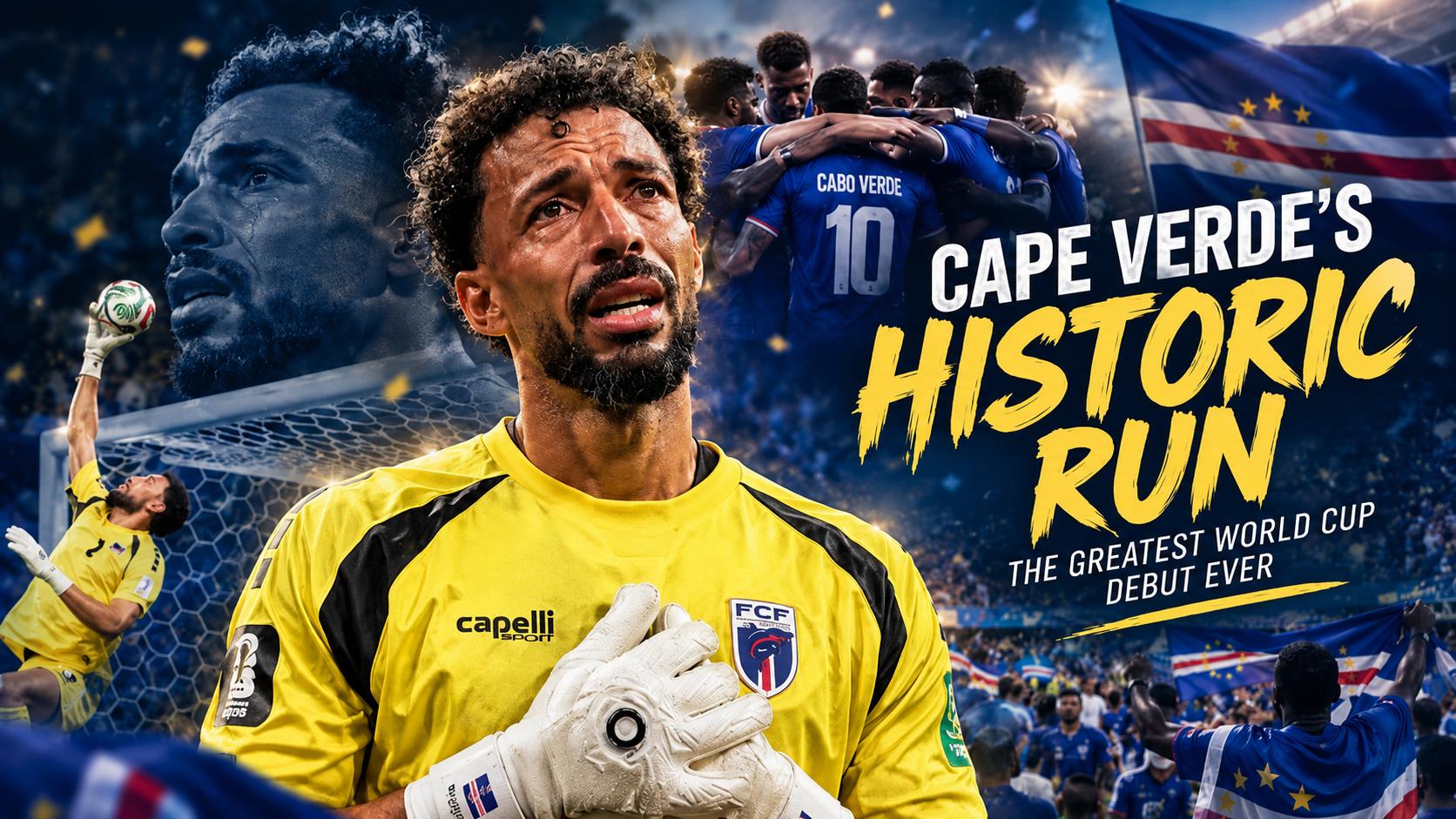
The Man Who Made It Possible
Vozinha was 40 years and 12 days old when he walked out at the Atlanta Stadium for Cape Verde’s opening match against Spain. That made him the oldest player to appear in a nation’s debut World Cup match, surpassing the record set days earlier by Curacao’s Eloy Room.
His career had been built on perseverance rather than glamour. He began playing professional football at 25, late by any standard. He played across Portugal, Slovakia, Angola, Moldova, and Cyprus before arriving at this World Cup with Portuguese second-tier side Chaves. At 40, he was still waiting for his moment.
Against Spain, it arrived. He made seven crucial saves as the European champions pressed relentlessly, each one met like a Cape Verde goal by the thousands of supporters in blue, red, and white in the stands. He was the only goalkeeper over 40 to have made more saves in a single World Cup match since Pat Jennings made 10 on his 41st birthday for Northern Ireland against Brazil in 1986.
Before the tournament, Vozinha had 50,000 followers on Instagram. By the time Cape Verde reached the knockout stage, that figure had climbed past 22 million.
“Everyone thought that we came here just to enjoy the World Cup,” Vozinha said. “But no. We know that we have teams that we will always respect, because this is our first time, but we are here to compete, and we are here to fight for our country.”
The Group Stage: Three Matches, Zero Defeats in Regulation
Cape Verde’s group stage was not built on one result. It was built on four consecutive performances that proved the first was not a fluke.
The 0-0 draw against Spain was the moment the world took notice, but it was what came next that confirmed this was a team of genuine substance.
Against Uruguay, Cape Verde fell behind but refused to fold. They scored the first two World Cup goals in their history to draw 2-2, and for more than 20 minutes they held the lead against a nation that has appeared in eleven World Cups. Against Saudi Arabia, they produced another disciplined, organised performance to earn the goalless draw that confirmed their place in the knockout stage.
Cape Verde left the group stage having played against three former World Cup winners without losing any game inside 90 minutes. They were the smallest nation ever to reach the World Cup knockout stage.
Defender Pico Lopes, who has spent his entire career in the League of Ireland and was initially approached to represent Cape Verde on LinkedIn in a message he initially ignored thinking it was spam, captured the significance plainly: “Nobody has to ask where Cape Verde is now. They know where we are.”
The Round of 32: Pushing the Champions to the Limit
If the group stage announced Cape Verde to the world, the Round of 32 against Argentina in Miami Gardens wrote their name into history permanently.
Argentina were the defending champions. They had Lionel Messi. They were ranked in the top five in the world. Cape Verde were the third-smallest country ever to qualify for a World Cup.
Argentina needed until the 111th minute to beat them.
Cape Verde matched the world champions for long stretches, competing in every duel, defending with the same organised discipline that had frustrated Spain, Uruguay, and Saudi Arabia. Sidny Lopes Cabral added one of the tournament’s great individual moments with a stunning wonder strike that briefly kept Cape Verde’s hopes alive at 3-2. Only a fine late save from goalkeeper Emiliano Martinez stopped them from making it 3-3 and forcing penalties.
Argentina coach Lionel Scaloni, sitting down for his post-match press conference, let out a sigh before speaking. “Everyone thought it was going to be a walk in the park, but we knew it wouldn’t be,” he said. “The match was ugly for us. We struggled.”
That was the ultimate compliment. The defending world champions had struggled against a nation whose goalkeeper plays in Portugal’s second division and whose defender had to be messaged twice on LinkedIn before realising the call-up was genuine.
Cape Verde left Miami Gardens having created something extraordinary: they became the first country to complete a debut World Cup without losing any match in regular time. Their only defeat came after 90 minutes.
What Their Story Means
Head coach Pedro “Bubista” Brito stood up at the end of his post-match press conference and was applauded out of the room by the gathered journalists. His response was to turn and touch his heart.
“We did our best and we did it with bravery,” he said. “We stayed true to our identity. Being a small country is no impediment. We could have played in a different way, but we chose not to. That goes back to our pride. I can only thank the team for their effort and showing so much heart. They showed what our country is about.”
There were tears in the dressing room after the Argentina defeat. They will not last long. Vozinha and some of his younger teammates are likely to earn transfers to new clubs following their newfound global recognition. The 40-year-old goalkeeper, who once considered leaving the national team before deciding to continue chasing his World Cup dream, will almost certainly play in a higher league next season than he did before June 15.
Cape Verde arrived at this tournament as the third-smallest nation ever to qualify. They left as the smallest nation ever to reach the knockout stage, the first debut nation in history to go unbeaten in regulation time, and one of the defining stories of the 2026 World Cup.
“More than just playing,” Bubista said, “it was about showing the world our identity.”
They did exactly that. And the world was watching.
Follow for daily post-tournament analysis, player profiles, and the latest football news.