In 2027, Kenya will co-host the Africa Cup of Nations alongside Uganda and Tanzania, after Nigeria lost its own hosting bid to the East African trio in 2023. It is the biggest single moment in the region’s football history, and it lands at a point when Kenyan domestic football is finally settling after years of sponsorship chaos. The Kenyan Premier League has existed in some form since 1963. It has never had a platform quite like this.
Key Takeaways
- Kenya, Uganda, and Tanzania will jointly host the 2027 Africa Cup of Nations, having taken the tournament away from Nigeria’s original bid.
- The Kenyan top flight dates back to 1963 and became a formally incorporated, club-owned company in 2003.
- Sponsorship has been volatile, cycling through Tusker, SportPesa, and BetKing before SportPesa returned in 2025 on a ten-year deal worth over a billion Kenyan shillings.
- Gor Mahia and AFC Leopards’ Mashemeji Derby is East Africa’s biggest club rivalry, and Gor Mahia hold the record for league titles.
- Victor Wanyama remains Kenyan football’s clearest proof of what the country’s talent can achieve on the biggest European stages.
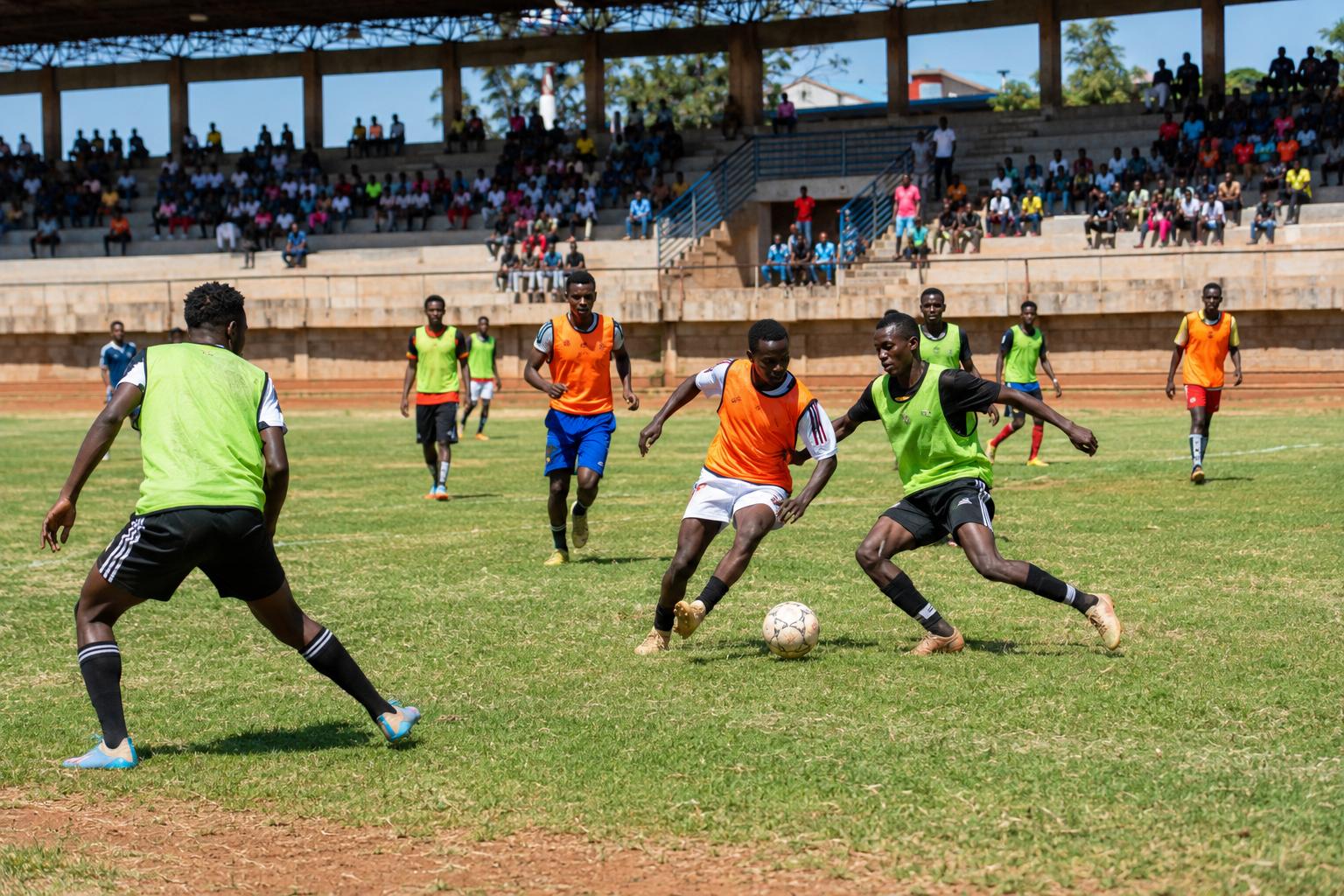
A League With a Complicated Sponsorship History
Kenyan top-flight football traces back to 1963, when it operated as the Kenya National Football League under the Kenya Football Federation. It took until October 2003 for the league to become a properly incorporated company, jointly owned by its 18 member clubs, giving the competition a structure closer to what fans of European football would recognise.
Sponsorship has been the league’s most unstable feature. East African Breweries backed it as the Tusker Premier League from 2012, before SportPesa took over naming rights in 2015 in a deal worth 450 million Kenyan shillings, only to withdraw in 2018 amid a dispute over gambling taxes. BetKing stepped in for a two-year deal that was also cut short. SportPesa returned in 2025 with a ten-year, 1.12 billion shilling agreement, with 60 percent of that money distributed directly to member clubs, a level of long-term commitment the league has rarely enjoyed before.
The competition itself runs a straightforward double round-robin across 18 clubs, 34 matches a season, and shifted its calendar in 2018 from a February-to-November format to an August-to-May one, bringing it in line with the European season most Kenyan fans already follow closely.
Gor Mahia and AFC Leopards: the Mashemeji Derby
Kenyan football has its own answer to the world’s great local rivalries in Gor Mahia against AFC Leopards, known as the Mashemeji Derby, a Swahili word roughly meaning in-laws. Gor Mahia have been the more successful side in recent decades and extended their record league title haul into the 20s with the 2024-25 championship, while AFC Leopards’ most recent title dates back to 1998.
The rivalry runs deeper than recent results. Both clubs command fan bases that stretch well beyond Nairobi, and their meetings remain the closest thing Kenyan football has to a guaranteed sell-out. The league’s individual records show the same appetite for goals: striker Elvis Rupia set the single-season scoring record with 27 goals in the 2022-23 campaign, a mark that gave the competition genuine star power of its own beyond the two big clubs.
Harambee Stars and the Talent Pipeline
Victor Wanyama, who built his career at Celtic, Southampton, and Tottenham before returning to play and coach at home, remains the clearest example of what Kenyan football can produce when a player gets a route to Europe early. His international career with Harambee Stars, Kenya’s national team, has been more mixed, with the country still chasing consistent Africa Cup of Nations qualification even as individual talent keeps emerging from the domestic league.
That gap between individual quality and collective results is exactly what the 2027 tournament is meant to help close, giving Kenyan football a home audience, home pressure, and a genuine deadline to get the pipeline working end to end. Wanyama’s own recent return to the Harambee Stars setup, years after his move to Europe, shows how much weight the country’s biggest football name still carries at home.
Why 2027 Could Be a Turning Point
A ten-year sponsorship deal and a home Africa Cup of Nations arriving in the same few years is not a coincidence so much as a chance the Kenyan game has not had before. Stadiums are being upgraded, investment is more stable than at any point in the league’s recent history, and East Africa’s biggest football nation finally has a reason for the rest of the continent, and the rest of the football world, to pay attention on its own terms.