A cap is simply one appearance for a national team, whether the player starts the match or comes on for the final minute of stoppage time. A player with “80 caps” has featured in 80 official international matches for their country, and the number only grows for competitive fixtures and internationals recognized by FIFA or the relevant confederation.
The word itself is a leftover from a tradition that stopped decades ago, which is exactly why new fans find it such an odd piece of football vocabulary.
Key Takeaways
- A cap is one appearance for a national team in an official FIFA or confederation-recognized match, regardless of minutes played.
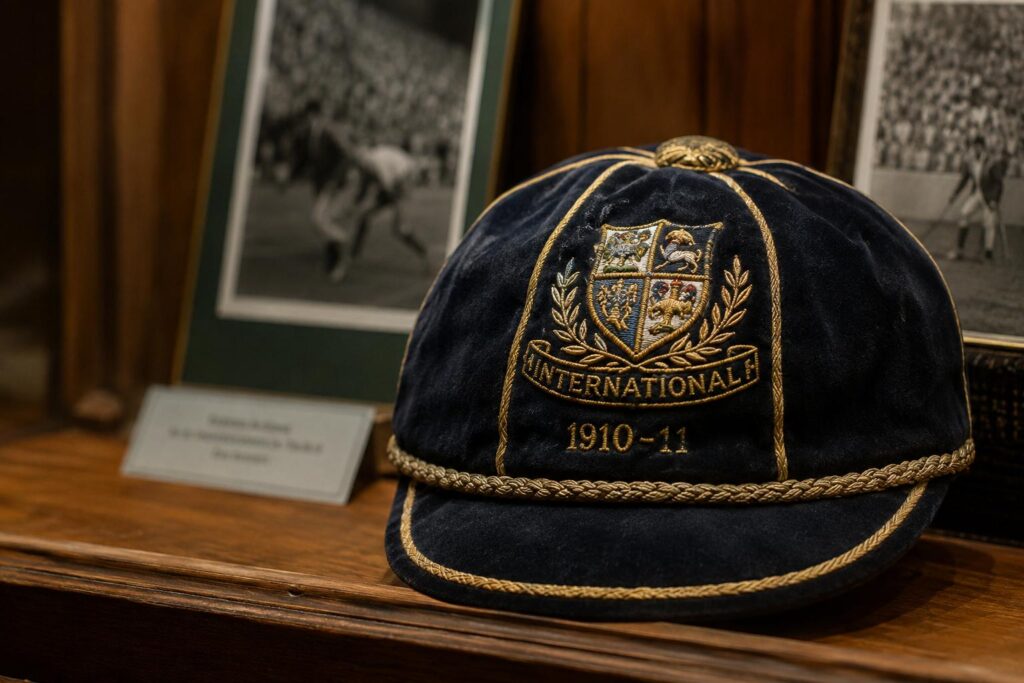
- The term comes from a 19th-century English FA tradition of awarding a physical cloth cap for every international appearance.
- Youth internationals and unsanctioned friendlies do not count toward a senior cap total.
- Cristiano Ronaldo holds the men’s record with over 230 caps; Kristine Lilly holds the women’s record with over 350.
- A “cap-tied” player is generally locked to one country for life, though FIFA’s 2021 rule allows a one-time switch under strict conditions.
Where Does the Term “Cap” Actually Come From?
The tradition is credited to the English Football Association, which began awarding an actual cloth cap to every player selected for an international match back in the 1880s. Each cap was embroidered with the country’s crest, the opponent, and the date, turning it into a physical keepsake rather than a stat on a screen.
Other football associations, and other sports entirely, picked up the same custom. Some countries, England included, still present players with a commemorative cap today, even though nobody needs the object itself to prove how many times they have played for their country.
How Does a Cap Actually Get Counted?
A cap is awarded for playing any part of a match FIFA or a confederation recognizes as an official international, which usually means the following count toward a player’s total.
- World Cup and continental championship matches, including qualifiers.
- FIFA-recognized friendlies played during official international windows.
- Nations League and other confederation competition fixtures.
Not every match in a shirt counts. Youth internationals below senior level do not add to a senior cap total, and matches FIFA does not formally sanction, including many pre-season club friendlies dressed up as “international” fixtures, are excluded as well.
One Cap, Any Amount of Playing Time
A substitute appearance of a single minute counts exactly the same as playing all ninety, since the cap marks selection and involvement in the match, not minutes on the pitch. This is why squad players with modest game time can still rack up a respectable cap total across a long international career, provided they keep getting picked.
Why Does a Cap Count Matter to Players and Fans?
A cap count is one of the cleanest ways to measure loyalty and longevity to a national team, since it strips away club form, transfer fees, and everything else and leaves a single number: how many times a country’s manager trusted this player enough to select them.
Reaching a round number, fifty caps or a hundred, is treated as a genuine milestone in most football cultures, often marked with a guard of honor or a small on-pitch ceremony before kickoff. It signals a player has moved from a promising talent to a genuine fixture of the national side.
Who Holds the Record for Most Caps?
Cristiano Ronaldo holds the record for the most capped male international footballer, with more than 230 appearances for Portugal and counting as he continues playing on. The women’s record belongs to former United States international Kristine Lilly, who retired in 2010 with well over 350 caps, a tally no active player has come close to matching since.
Totals like these are only realistic in eras with dense international calendars and long careers at the top level, which is part of why a record like Lilly’s has stood for well over a decade with no serious challenger in sight.
Can a Player Switch Countries After Winning a Cap?
Not easily, and this is where the term “cap-tied” comes in. Playing a single competitive senior match for one country used to lock a player to that association for their entire career, even if they held dual nationality and had a genuine case to represent somewhere else.
FIFA softened that rule in 2021. A player can now request a one-time switch if they have not made more than three competitive senior appearances, were under 21 for all of them, and have not played for that country in at least three years. Outside those conditions, a senior competitive cap is still permanent, which is why the term carries real weight for any dual-national teenager weighing up an international future.
Understanding a Cap Count Next Time You Hear It
Once you know what a cap actually represents, a player’s tally stops being an abstract stat and starts reading like a career summary. Every cap is a manager choosing that player over every alternative available for that match, repeated as many times as the number in front of you.
So the next time a commentator mentions someone winning their thirtieth or hundredth cap, you will know it is not just a number being read off a graphic. It is a record of a national team trusting the same player, match after match, for however many years it took to get there.