A walkover happens when a match is not played at all because one team withdraws, is expelled, or cannot field a valid side, and the opposition is awarded the win without kicking a ball. It shows up most often in cup competitions and lower-league football, where fixture rules are stricter and a club’s resources are thinner than at the professional level.
It is one of the odder entries in a results list, since it looks like a completed match but really represents a game that never happened.
Key Takeaways
- A walkover happens when a match is never played because one team withdraws, is expelled, or cannot field a valid side.
- English non-league and cup competitions often record a walkover as a 3-0 scoreline, though some competitions just log it as “w/o”.
- A walkover is different from a bye, which is scheduled in advance rather than triggered by a team dropping out.
- It is also different from a postponement, which is rescheduled, since a walkover result stands permanently.
- Professional leagues often expunge a collapsed club’s results entirely rather than award their opponents a string of walkovers.
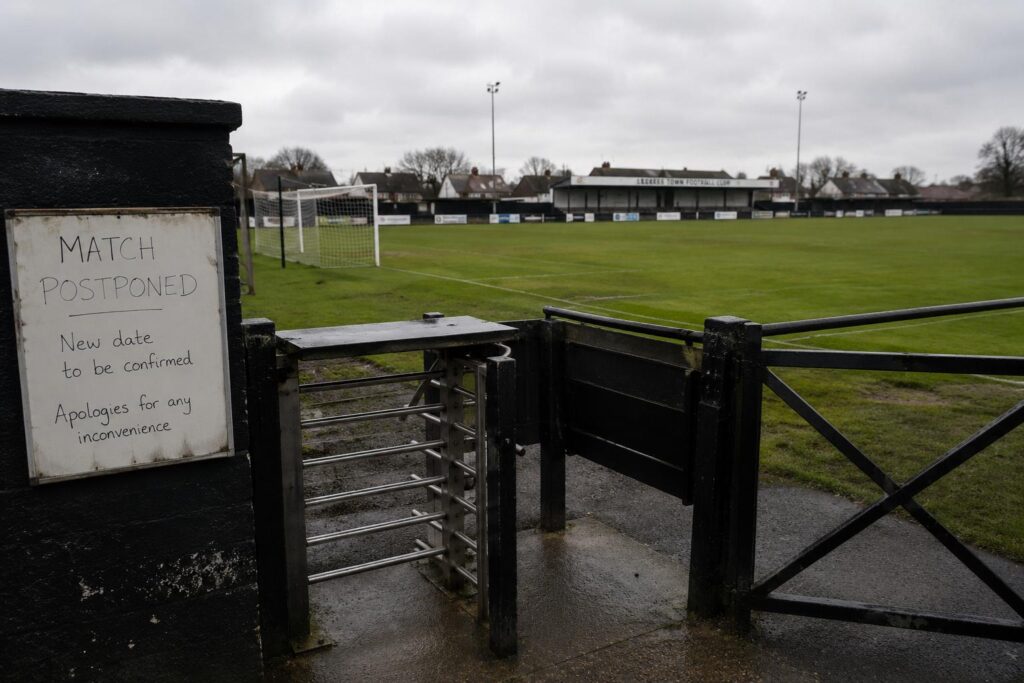
When Does a Walkover Actually Happen?
A walkover is triggered by a small, specific set of situations rather than anything to do with form or performance on the pitch.
- A team withdraws from the competition before the fixture is played.
- A club is expelled or suspended by the governing body for a rules breach.
- A side cannot raise the minimum number of eligible players required to start.
- A team fails to travel to, or turn up for, a scheduled fixture without a valid postponement.
Each of these situations is treated as a forfeit, and the rules of most competitions simply hand the tie to whichever side was ready and able to play.
Why Does “Home Walkover” Get Used as a Label?
“Home walkover” is a scheduling term more than a football one. Before a tie is played, a fixture list already lists a designated home and away side, and that label sticks even after the match turns into a walkover rather than an actual game. It tells administrators and record-keepers which club would have hosted, which matters for ground allocation, gate receipts, and future draw seeding, even though no fans actually walked through a turnstile for that round.
How Is a Walkover Recorded in the Result?
English non-league and cup competitions have traditionally recorded a walkover as a 3-0 scoreline in favor of the team that advances, a convention that keeps goal difference calculations consistent without pretending an actual match took place. Some competitions instead simply log the result as “w/o” with no scoreline attached, leaving goal difference untouched.
The exact approach depends on the competition’s own rulebook, so it is worth checking the specific rules of a league or cup before assuming which convention applies.
Walkover vs Postponement vs Abandonment
These three terms get mixed up constantly, but each describes a different outcome.
| Term | What Happens | Is the Match Rescheduled? |
|---|---|---|
| Walkover | Match never played, one side forfeits | No, result stands as a forfeit |
| Postponement | Match called off before kickoff | Usually yes, rearranged for a later date |
| Abandonment | Match stopped after starting | Depends on the competition’s rules, sometimes replayed from scratch |
A postponed match still has to be played eventually. A walkover never does, since the forfeiting side has already lost their right to contest the tie.
Is a Walkover the Same as a Bye?
No, and the difference matters for how a draw is understood. A bye is built into the competition before a single fixture is even set, usually because the number of entrants does not divide evenly into a knockout bracket, so one side is scheduled to progress automatically with no opponent assigned at all.
A walkover, on the other hand, starts as a genuine fixture between two named teams. It only becomes a walkover once one side drops out, gets thrown out, or fails to show, after the tie has already been drawn and scheduled.
Why Walkovers Are Rare in the Professional Game
Walkovers show up far more often in cup preliminary rounds and grassroots leagues than anywhere near the top of the professional pyramid, mostly because top-flight clubs have the resources and obligations to fulfill nearly every fixture on the calendar. When a professional club does collapse mid-season, competitions often handle it differently to a straightforward walkover.
Bury’s expulsion from the English Football League in 2019, after a takeover collapsed and the club failed to prove it could fund the rest of the season, is a good illustration of the distinction. Rather than awarding their remaining opponents a string of walkovers, the EFL simply expunged Bury’s results from the season entirely, treating the fixtures as if they had never been scheduled. A cup competition facing the same situation partway through a round would more likely hand the tie to the surviving club as a walkover instead.
Reading a Walkover Result for What It Is
A walkover in the results column is not a hidden scandal or a mistake in the data. It is simply the rulebook’s way of handling a fixture that could not go ahead through no fault of the team that was ready to play, and awarding the win to the side that did everything right.
Next time a scoreline reads 3-0 with no report to go alongside it, or a bracket shows “w/o” instead of a final score, you will know exactly what happened before the match even had a chance to kick off.