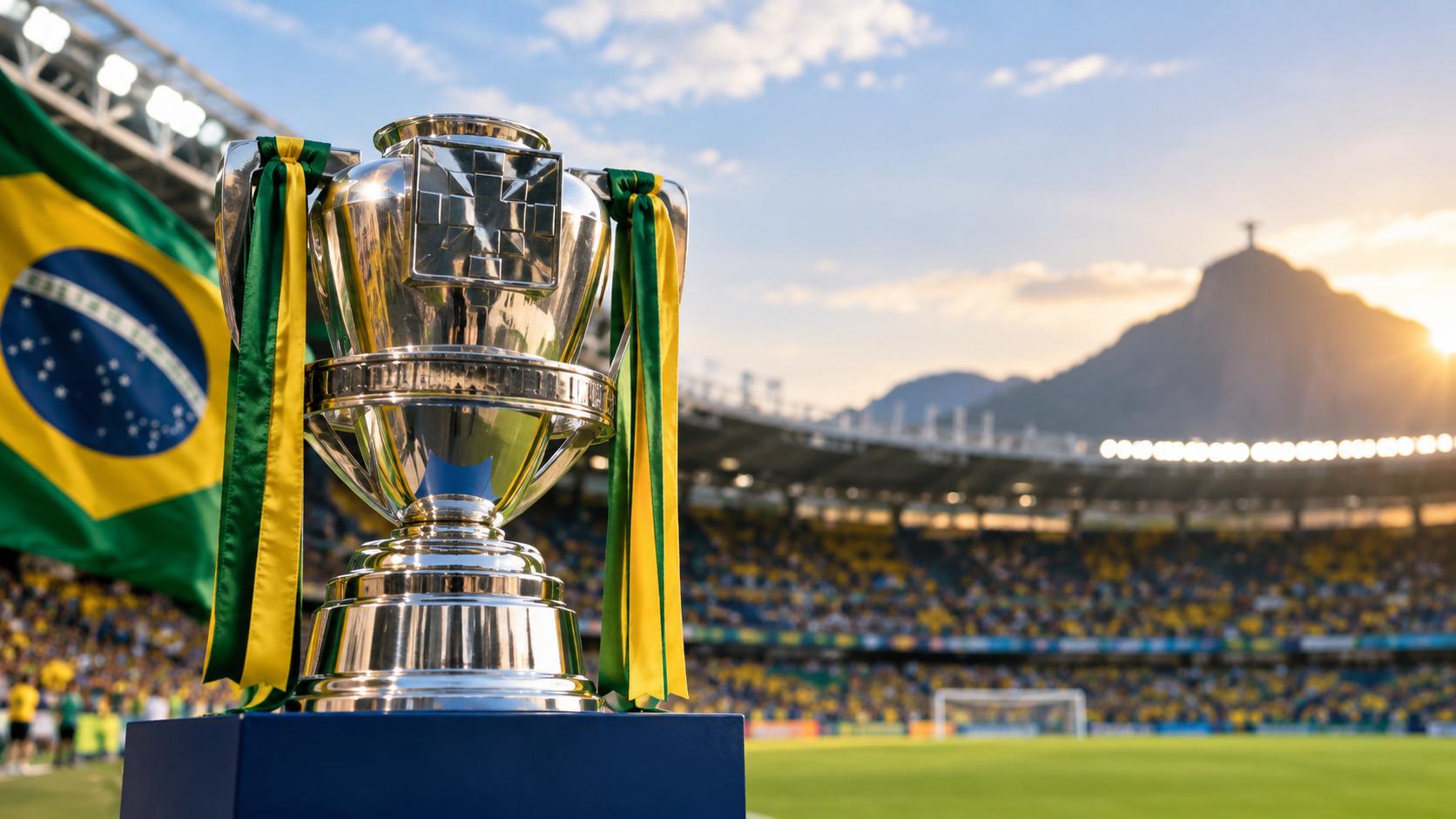
On 21 December 2025, Corinthians won the Copa do Brasil by beating Vasco da Gama 2-1 on aggregate. The payday was huge. CNN Brasil reported that Corinthians collected R$97.791 million in prize money across the whole run, the largest amount ever paid to a champion of the competition.
That number says a lot about how Brazil’s cup has grown. This guide covers how it works, who wins it, what the money looks like and how the 2026 edition changed the format.
Key Takeaways
- The Copa do Brasil began in 1989 and is Brazil’s main domestic knockout competition, played alongside the Brasileirão.
- The 2026 edition has 126 clubs, up from 92 in 2025, and ties are single-leg until the fifth stage.
- The winner earns a place in the next Copa Libertadores group stage, and from 2027 the runner-up also gets a place in the preliminary stage.
- Cruzeiro lead the all-time list with six titles, ahead of Flamengo and Grêmio on five each.
How the Competition Works
The Copa do Brasil is a straight knockout. A club that loses is out, and there is no table to recover on, which is exactly why it produces so many surprises. Clubs from all 26 states and the Federal District can take part.
Entry comes through several routes: state championships, the national league, the CBF ranking and regional cups. Smaller clubs start early, and the biggest names join later, which gives the draw a lot of influence.
1. The 2025 Format
Last year’s edition had 92 teams and ran from 18 February to 21 December. The first two rounds were single matches. From the third round onward, ties were played home and away.
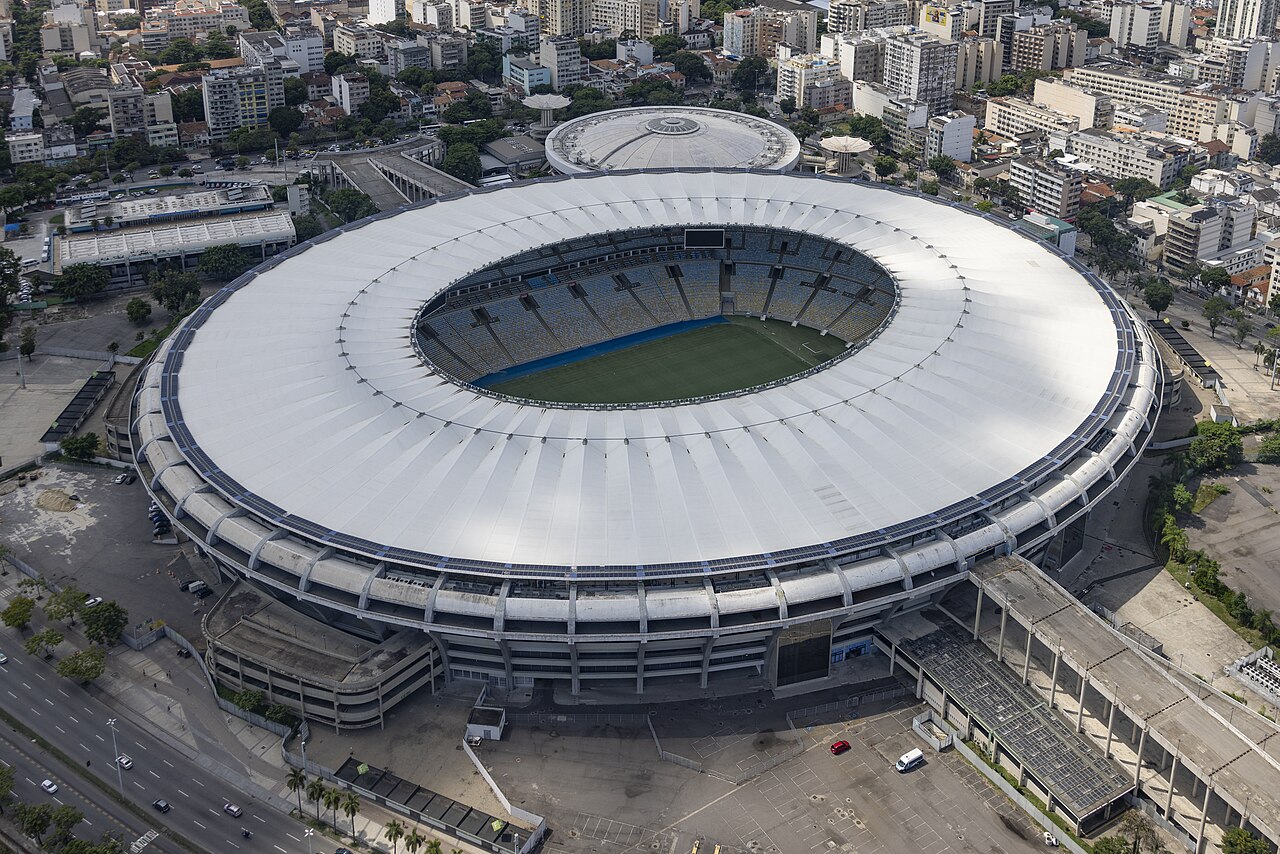
Clubs with continental commitments entered at the third round, alongside the 20 teams that had come through the early stages. The final was two legs. Corinthians and Vasco drew 0-0 at the Neo Química Arena on 17 December. Corinthians then won the second leg 2-1 at the Maracanã on 21 December, with goals from Yuri Alberto and Memphis Depay against one from Nuno Moreira. The first leg drew 47,339 fans and the second leg 67,111.
The path to the trophy in 2025 looked like this:
| Stage | Teams In | Winners Through |
|---|---|---|
| First round | 80 | 40 |
| Second round | 40 | 20 |
| Third round | 20 plus 12 entering | 16 |
| Round of 16 | 16 | 8 |
| Quarter-finals | 8 | 4 |
| Semi-finals | 4 | 2 |
2. The 2026 Changes
The 2026 edition has 126 teams and five stages before the round of 16, with single matches from the first to the fourth stage. Two-legged ties begin in the fifth round. The final is now a single match in a stadium of at least 40,000 capacity, set for 6 December 2026 at the Mané Garrincha stadium in Brasília.
The semi-finals start on 1 November 2026 (the full fixture list is below), and, as of 30 October 2026, the four clubs still in are Grêmio, Atlético Mineiro, Vasco da Gama and Palmeiras. The Brasileirão sides among them are covered on the Brazilian Série A league profile.
2026 Semi-Finals: Fixtures and Route to the Last Four
Information in this section is correct as of 30 October 2026, before the first legs are played.
The CBF confirmed the semi-final fixtures on 27 September, and the schedule runs as follows. Kick-off times are Brasília time (UTC-3).
| Date | Match | Venue | Kick-off |
|---|---|---|---|
| 1 Nov (first leg) | Palmeiras v Vasco da Gama | Nubank Parque, São Paulo | 16:00 |
| 1 Nov (first leg) | Grêmio v Atlético Mineiro | Arena do Grêmio, Porto Alegre | 18:30 |
| 7 Nov (second leg) | Atlético Mineiro v Grêmio | Arena MRV, Belo Horizonte | 18:00 |
| 8 Nov (second leg) | Vasco da Gama v Palmeiras | São Januário, Rio de Janeiro | 17:00 |
| 6 Dec (final) | Winners of the two ties | Mané Garrincha, Brasília | To be confirmed |
All four clubs came through the quarter-finals against familiar rivals: Palmeiras beat Santos, Vasco beat Vitória, Atlético Mineiro beat Cruzeiro and Grêmio beat Internacional in a Gre-Nal.
The draw has some good storylines. Palmeiras and Vasco meet for the first time in a Copa do Brasil knockout tie, while Atlético Mineiro and Grêmio last met in a final in 2016, which Grêmio won. A Palmeiras win would bring a fifth title, and Grêmio would move level with Cruzeiro on six. Vasco, whose only title came in 2011, and Atlético Mineiro, with two, are both looking to add to their collections. Atlético Mineiro also have a second final in sight, since they have reached the Copa Sudamericana final on 21 November (see our Copa Sudamericana guide).
Depending on the results, the final could be Palmeiras v Atlético Mineiro, Palmeiras v Grêmio, Vasco v Atlético Mineiro or Vasco v Grêmio.
Why Smaller Clubs Love It
The early rounds are where the cup gets its charm. In 2025, 80 clubs played the first round, and state-league representatives started there. A single match decides each tie, so a lower-division side only needs one good night.
Because the bigger clubs do not enter until the third round, the first two stages are where you will find the unfamiliar names. If you want to learn about the clubs below the top flight, our guide to Brazil’s Série B is a useful companion.
Who Has Won the Most Titles
| Club | Titles |
|---|---|
| Cruzeiro | 6 |
| Flamengo | 5 |
| Grêmio | 5 |
| Corinthians | 4 |
| Palmeiras | 4 |
Grêmio won the first edition in 1989. Cruzeiro’s most recent wins came back to back, in 2017 and 2018, and Flamengo’s latest are 2022 and 2024.
Recent Winners
| Year | Champion |
|---|---|
| 2019 | Athletico Paranaense |
| 2020 | Palmeiras |
| 2021 | Atlético Mineiro |
| 2022 | Flamengo |
| 2023 | São Paulo |
| 2024 | Flamengo |
| 2025 | Corinthians |
The 2024 final was a clear Flamengo win. They beat Atlético Mineiro 3-1 at home and 1-0 away, and Gabigol scored twice in the first leg. That is a good example of what the cup rewards: players and clubs that peak in two matches.
The Money
The prize pool has become one of the cup’s main selling points. In 2025 Corinthians earned R$77.175 million for the final and about R$20.6 million from earlier rounds, which adds up to roughly R$97.8 million. Vasco, the runner-up, received R$33.075 million for the final.
For many clubs, the cup is worth more than a mid-table league finish. That is why Brazilian clubs take it so seriously, even when the league race is going well, and why a cup run can change a club’s season.
The 2026 edition raises the stakes again. The CBF plans to distribute about R$500 million in prize money, with R$78 million for the champion’s final and R$34 million for the runner-up. Including earlier rounds, a champion can collect up to R$99.25 million.
Why It Matters for the Libertadores
The champion goes straight into the next Copa Libertadores group stage. Corinthians did exactly that for 2026.
The runner-up is now rewarded too. From 2027 the Copa do Brasil gives two Libertadores places: the champion enters the group stage and the runner-up enters the preliminary stage.
For clubs outside the league’s top places, that is a chance to reach South America’s biggest competition by winning only a handful of ties. You can follow the continental side on the Copa Libertadores league profile.
Records and Standouts From 2025
The 2025 edition had 122 matches and 279 goals, an average of 2.29 per game. Kaio Jorge of Cruzeiro and Rayan of Vasco da Gama tied as top scorers with five goals each. Corinthians’ goalkeeper Hugo Souza was named both the best player and the best goalkeeper.
Corinthians entered in the third round and needed only five ties to win the trophy, from the third round to the final. Clubs that start in the first round play more ties for the same prize, so a late entry is a real advantage.
Those numbers also show how competitive the knockout rounds are. A goalkeeper winning the player-of-the-tournament award is a sign that the finals were tight.
Following the Cup and the League
The cup runs alongside the league, so many clubs juggle both. The Brazilian Série A league profile covers the Brasileirão rounds, and the leagues hub lists every other competition we cover.
What the Copa do Brasil Offers
The Copa do Brasil combines knockout drama with real money and a Libertadores ticket. The 2026 changes make it bigger and give the final a one-night showpiece feel.
If you want to follow it properly, keep an eye on the semi-finals (first legs on 1 November, second legs on 7 and 8 November) and then pencil in 6 December for the one-match final in Brasília.