Siphiwe Tshabalala’s 55th-minute volley against Mexico did more than open the scoring in the first match of the 2010 World Cup. It was the moment an entire continent watched itself host the biggest event in world sport for the first time, at FNB Stadium in Johannesburg, in front of a global audience that had spent years doubting South Africa could pull it off.
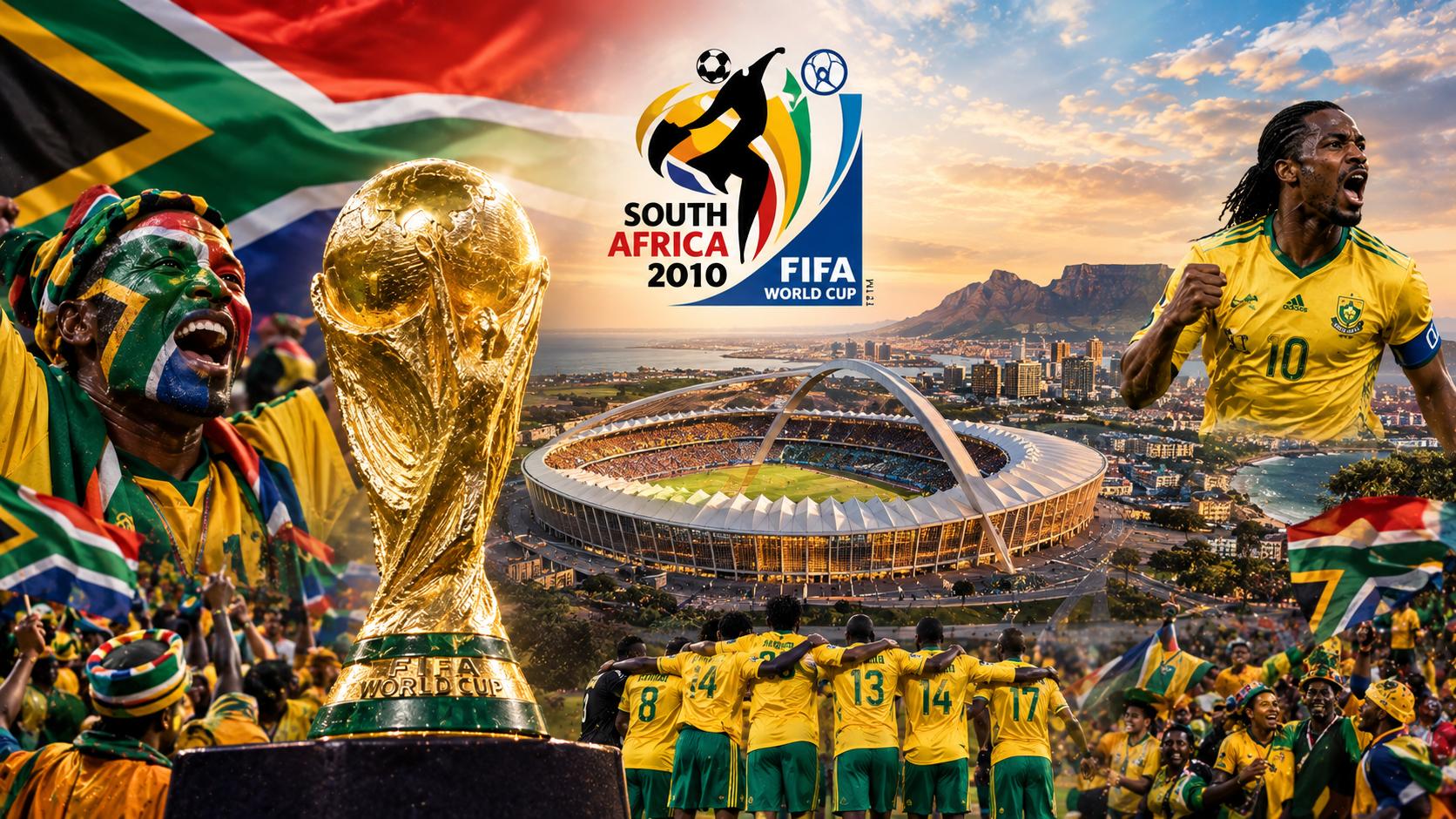
Key Takeaways
- South Africa 2010 was the first FIFA World Cup ever hosted on African soil, running from 11 June to 11 July across 10 stadiums in 9 cities.
- Host nation South Africa were eliminated in the group stage despite beating France 2-1, becoming the first host nation in World Cup history to go out at that stage.
- The tournament drew over 3.1 million spectators and introduced the vuvuzela to a global television audience.
- Spain won the tournament, beating the Netherlands 1-0 in extra time at Soccer City, the same stadium that hosted the opening match.
- Construction costs reached roughly £3 billion, far outweighing the tourism revenue the event actually generated.
Why Hosting The World Cup Mattered So Much
FIFA had never awarded a World Cup to an African nation before 2010, and plenty of observers spent the years leading up to the tournament questioning whether South Africa could deliver the infrastructure and security a modern World Cup required. Five brand new stadiums were built specifically for the tournament, alongside five existing venues renovated to meet FIFA’s standards, spread across nine host cities including Johannesburg, Cape Town, Durban, Pretoria and Port Elizabeth.
Getting the tournament built and ready on time was, on its own terms, already a genuine achievement, regardless of how the football itself played out.
Read More: Who Are Bafana Bafana? South Africa’s National Football Team Explained covers the national team that carried the weight of playing as hosts.
Bafana Bafana’s Group Stage Run
South Africa opened the tournament with a 1-1 draw against Mexico on 11 June 2010, with Tshabalala’s 55th-minute opening goal becoming one of the tournament’s most replayed moments and earning a place on the shortlist for FIFA’s Puskas Award. Rafael Marquez equalised for Mexico in the 79th minute. The result gave the hosts a solid platform, even if the celebrations that followed proved premature.
The France Win That Wasn’t Enough
South Africa lost 3-0 to Uruguay in their second match, a result that put their progression to the knockout stage in serious doubt. They responded with a 2-1 win over France in their final group game, a genuinely good result against a major footballing nation, but it was not enough. South Africa finished third in Group A on four points and became the first World Cup host nation in the competition’s history to be eliminated in the group stage.
It remains one of the more painful footnotes of the tournament for South African football, a host nation good enough to beat France but not good enough to advance past a group that also contained Uruguay and Mexico.
Read More: South Africa at AFCON: The 1996 Title That Announced Bafana Bafana covers the tournament South Africa’s national side actually did win, on home soil, 14 years earlier.
How The Tournament Itself Played Out
With the hosts gone, the World Cup continued to build toward a final between Spain and the Netherlands, played at Soccer City in Johannesburg on 11 July 2010. Andres Iniesta settled the match with a goal in the 116th minute of extra time, giving Spain their first ever World Cup title in a tense, tightly fought 1-0 win.
Over 3.1 million spectators attended matches across the tournament, an average of nearly 50,000 per game, numbers that quietened at least some of the doubts about whether South African stadiums could fill for matches that did not involve the host nation.
The Vuvuzela Heard Around The World
If one single detail defined how the rest of the world experienced South Africa 2010 from their televisions, it was the vuvuzela, the long plastic horn that produced a constant, droning hum across every broadcast. Commentators and players from other countries frequently complained about the noise, but the instrument became genuinely inseparable from how the tournament is remembered, a distinctly South African contribution to World Cup history.
What The Tournament Actually Cost And Delivered
Building the stadiums and supporting infrastructure cost South Africa roughly £3 billion, a huge outlay for a country still working through deep post-apartheid inequality. Tourism revenue from the event came in at around £323 million, well short of the £570 million originally projected, even as FIFA itself reported global revenue of £2.24 billion from the tournament.
That gap between what South Africa spent and what it directly earned back has fuelled ongoing debate about whether hosting a World Cup is genuinely worth it for a developing economy, a conversation that resurfaces every time a new nation bids to host the tournament.
Read More: PSL Explained: A Guide to South Africa’s Premier Soccer League looks at the domestic competition that continued to develop South African talent long after the World Cup crowds had gone home.
The Legacy That Outlasted The Balance Sheet
Whatever the final economic numbers, South Africa 2010 proved something that mattered well beyond one country’s accounts: that an African nation could host the world’s biggest single sporting event and do it well. The tournament’s venues included FNB Stadium, also known as Soccer City, which hosted both the opening match and the final and is still used for domestic and national team football.
For African football more broadly, the tournament showed that the continent could host a World Cup. Other African nations have since taken on major tournaments of their own, with Morocco hosting AFCON 2025 and Kenya, Tanzania and Uganda due to co-host AFCON 2027. The AFCON hub on TuSportNews tracks that continental tournament as it continues to grow.
Sixteen years on, South Africa returned to the World Cup in 2026 and reached the knockout stage, the round of 32, for the first time in the country’s history, before losing 1-0 to Canada (Wikipedia). In 1998, 2002 and 2010 they had gone out in the group stage each time.