Six Japanese players will feature in the Premier League for the 2026-27 season, the highest number in the competition’s history, beating the previous record of five set just two seasons earlier. Wataru Endo, Kaoru Mitoma, Daichi Kamada, and three others all built their games inside a domestic league most fans outside Asia have still never watched a single match of. That league, the J1, turns 33 this year, and its story explains exactly why Japanese football keeps producing players good enough for Europe’s biggest competition.
Key Takeaways
- Six Japanese players will appear in the Premier League in 2026-27, a new record for the competition.
- The J.League launched in 1993 with 10 clubs and deliberately named teams after regions rather than sponsoring companies, breaking from Japan’s corporate sports tradition.
- Kashima Antlers are Japan’s most successful club with nine J1 League titles, including a 2025 win that ended a nine-year drought.
- Urawa Red Diamonds won the AFC Champions League in 2023, giving Japan eight continental titles, second only to South Korea.
- More than 100 Japanese players currently compete across Europe, a pipeline the J.League’s youth and community model has been building for three decades.
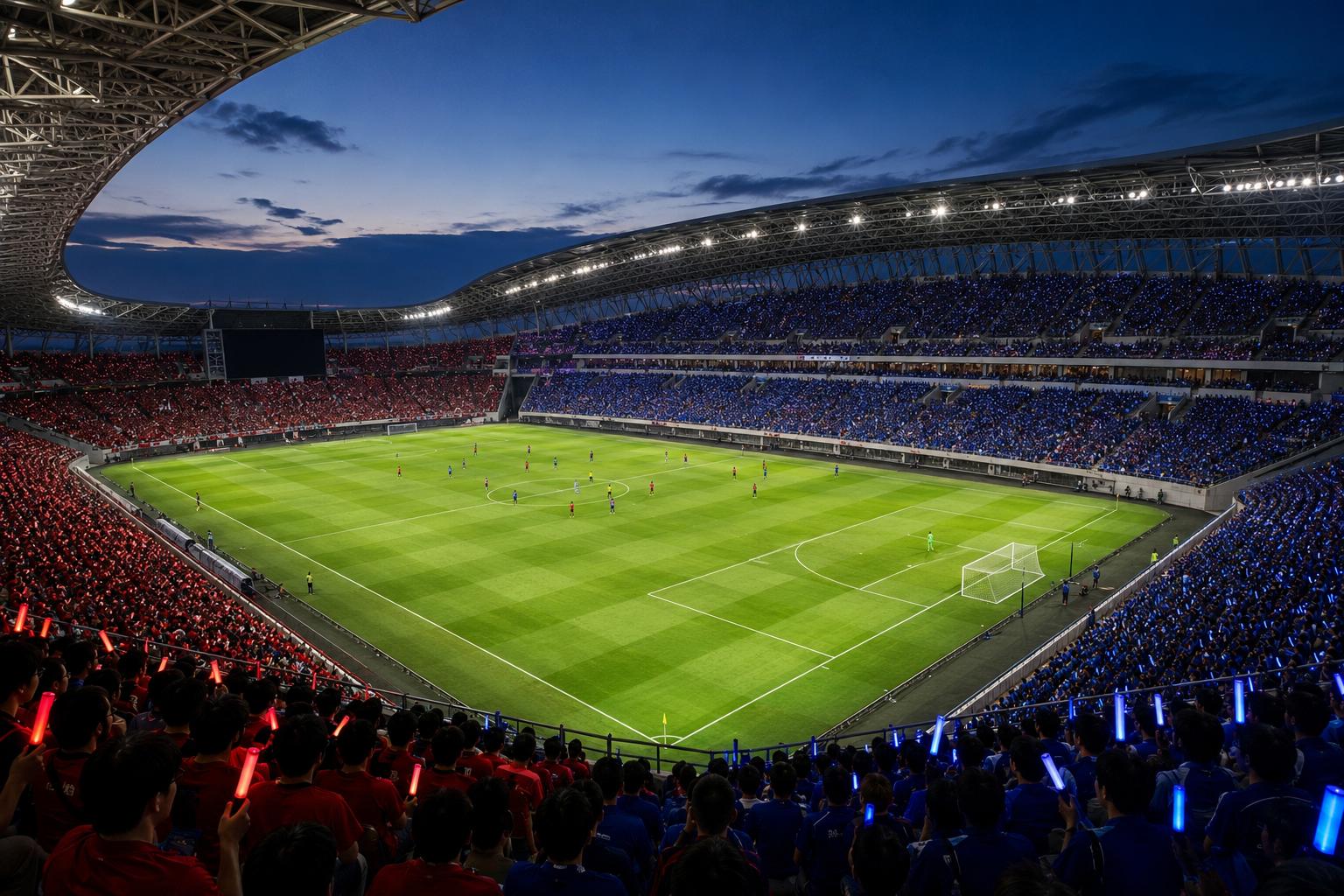
Built From Scratch in 1993
The J.League launched in 1993 with just 10 clubs and a clear goal: raise the standard of Japanese football and give the sport a genuine foothold in a country where baseball had always dominated. Rather than copy the corporate-sponsored team model that Japanese baseball had used for decades, the league required clubs to be named after their region rather than their owner, under the guiding slogan “a J.League team in your town.”
That decision shaped everything that followed. The league adopted what it called a 100 Year Vision, a long-term commitment to building community-rooted clubs rather than chasing short-term commercial wins, and today nearly all of Japan’s 47 prefectures have a professional club to call their own, spread across a three-tier system of J1, J2, and J3 with 60 clubs in total.
It was a genuinely unusual bet for the early 1990s, when most of Asia’s football investment still followed the corporate-team model Japan itself was walking away from. Three decades on, the results speak for themselves: a stable, well-attended top flight with almost no history of the financial collapses that have hit domestic leagues elsewhere in the region.
Kashima Antlers and Three Decades of Contenders
Kashima Antlers are Japan’s most decorated club by a wide margin, with nine J1 League titles, and are one of only two clubs never to have been relegated since the league turned professional in 1993, alongside Yokohama F. Marinos. Kashima’s most recent title arrived in 2025, ending a nine-year gap since their previous championship in 2016.
Urawa Red Diamonds carry the league’s biggest, loudest fanbase and backed it up continentally, winning the AFC Champions League in May 2023. That victory gave Japan eight Asian club titles in total, second only to South Korea’s twelve, and confirmed the J.League’s status as Asia’s strongest domestic competition rather than just its most stable one.
The Pipeline to Europe
More than 100 Japanese players are currently playing across Europe’s leagues, a figure that would have sounded implausible when the J.League launched in 1993. The 2026-27 Premier League season alone features six of them, Wataru Endo, Tatsuhiro Sakamoto, Kota Takai, Daichi Kamada, Ao Tanaka, and Kaoru Mitoma, a new record for English football’s top flight.
That is not an accident. Three decades of steady investment in youth academies and coaching infrastructure, built on the same community-first model that shaped the league’s founding, has turned Japanese footballers into some of the most sought-after imports in European scouting, valued for technical quality and professionalism as much as raw talent. Clubs in Germany’s Bundesliga in particular have leaned into the trend for years, treating Japanese signings as a comparatively low-risk way to add proven quality without paying the premium attached to players already established in one of Europe’s own top leagues.
A League Still Underestimated
Japan’s own national team success on the World Cup stage, including group-stage wins over genuine heavyweights in recent tournaments, traces directly back to a domestic league built deliberately and patiently rather than bought quickly. The J1 League will likely never draw the global television audience of Europe’s top five competitions, but the players it keeps sending into those very leagues are the clearest evidence of how well its long-term plan has actually worked.
For a league that started with ten clubs and a slogan about belonging to its towns, that is a genuinely remarkable return on three decades of patience.